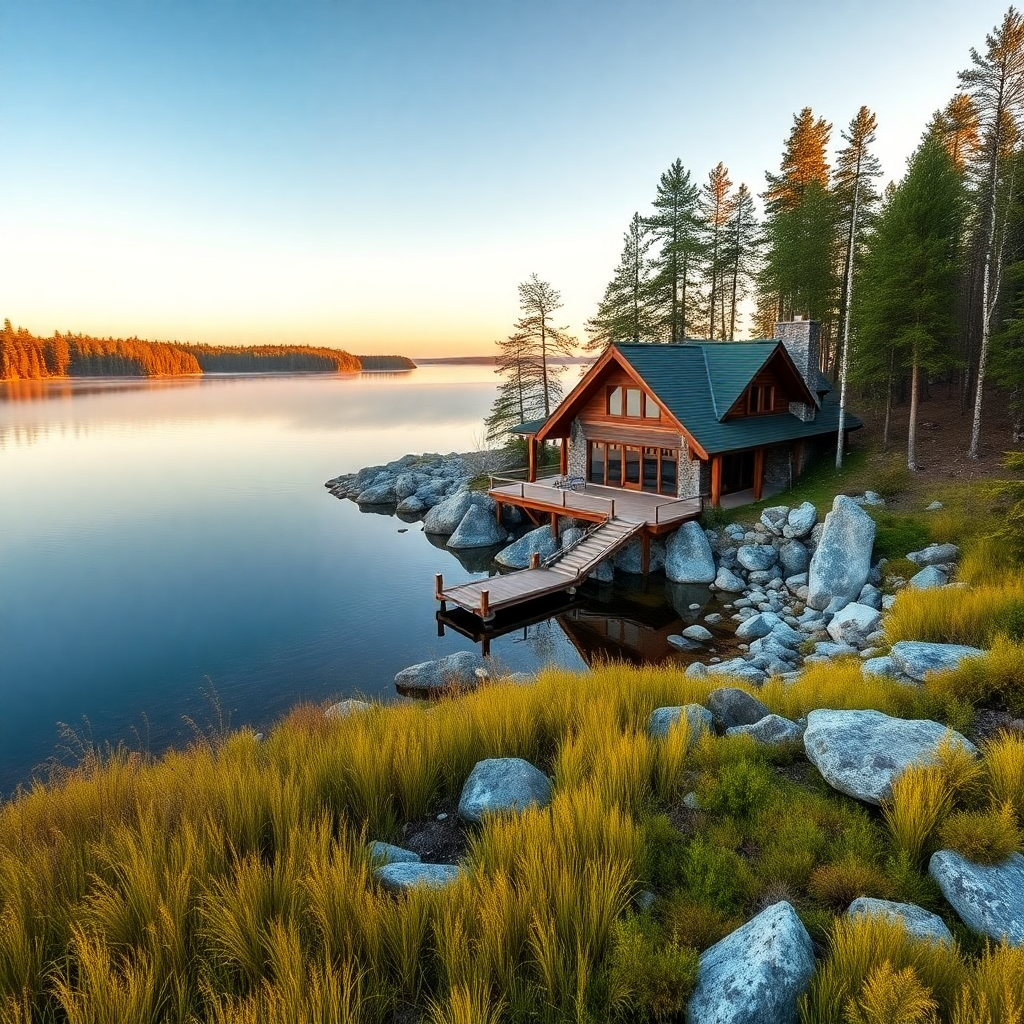
Shoreline Setbacks, MNR Rules, and Lakefront Design in Ontario
What Every Cottage Owner Should Know Before You Build
If you've ever stood at the water's edge of a Northern Ontario lake and imagined the perfect cottage, dock, or boathouse, you already know that feeling is hard to beat. But before a single stake goes into the ground, there's a layer of planning that separates a smooth project from a costly, permit-delayed headache — and it starts with understanding shoreline setbacks, Ministry of Natural Resources and Forestry (MNRF) regulations, and how they shape every decision we make in lakefront design.
At BrambleRidge Home Design Group, we work in cottage country every day. Here's what you need to know.
---
Understanding Shoreline Setbacks in Ontario
A shoreline setback is the minimum required distance between a structure and the high-water mark of a lake, river, or wetland. In Ontario, these setbacks are primarily governed at the municipal level through Official Plans and Zoning By-laws, but they must also align with provincial policy — including the Provincial Policy Statement (PPS) and applicable Conservation Authority regulations.
In many Northern Ontario municipalities, the minimum setback for a primary structure is 30 metres from the high-water mark, though this number varies significantly by township. Some jurisdictions require 15 metres; others push beyond 30 depending on the sensitivity of the shoreline or the classification of the waterbody.
What catches many clients off guard is that setbacks apply not just to the main cottage — they apply to decks, septic systems, garages, and sometimes even accessory structures. Knowing your specific zoning before you fall in love with a site plan is essential.
> Practical Tip: Always request a current zoning certificate and review the applicable Official Plan policies before commissioning design drawings. Setback rules can change, and grandfathered structures don't always mean grandfathered expansions.
---
The Role of the MNRF and Conservation Authorities
The Ministry of Natural Resources and Forestry sets the broader provincial framework for protecting Ontario's water resources, fish habitat, and natural heritage features. For cottage builders, this most often comes into play through Ontario's Public Lands Act and the Conservation Authorities Act at the provincial level, and through fisheries habitat regulations under the federal Fisheries Act — administered by Fisheries and Oceans Canada (DFO) — at the federal level.
Practically speaking, if your project involves any work at or near the water, you're likely navigating two separate permit streams. Shoreline work on land — grading, erosion control, and structures within a regulated area — typically requires a permit from your local Conservation Authority under Section 28 of the Conservation Authorities Act, in addition to a municipal building permit. For docks and boathouses that extend over Crown lakebed, the MNRF's Public Lands Act framework applies separately. Note that since 2019 legislative changes, small docks and boathouses touching 15 square metres or less of the lakebed may not require a provincial work permit — but larger structures or more complex projects still do.
Conservation Authorities like the North Bay-Mattawa Conservation Authority or the Nickel District Conservation Authority (Conservation Sudbury) review applications based on flood hazard, erosion risk, and natural heritage impact. Their input can directly affect where and how you build.
Understanding this multi-track approval process — municipal, Conservation Authority, and potentially MNRF — is one of the first things we walk new clients through at BRHDG.
---
How Setbacks and Environmental Rules Shape Good Lakefront Design
Rather than viewing setbacks and MNRF rules as obstacles, experienced lakefront designers treat them as a design framework. Some of our most successful projects were actually improved by working within tight shoreline constraints.
Here's how thoughtful design responds to these realities in Northern Ontario cottage country:
- Elevate and step back: Building on a raised platform or using a stepped design allows living spaces to remain back from the water while still capturing stunning lake views.
- Maximize sightlines, not footprint: Long, narrow floor plans oriented perpendicular to the shore often achieve better water views while respecting setback limits better than wide, sprawling designs.
- Preserve the natural buffer: The 30-metre zone isn't just a legal requirement — a healthy vegetated shoreline reduces erosion, filters runoff, and frankly looks better than manicured grass running to the water's edge.
- Plan your dock and boathouse early: These structures require their own approvals and can have significant setback and size restrictions. Integrating them into the overall site plan from day one avoids conflicts later.
Working With a BCIN-Certified Designer in Ontario
Navigating building code compliance, MNRF requirements, municipal zoning, and Conservation Authority approvals requires experience — and in Ontario, any professional designer (other than a licensed architect) preparing permit-ready drawings for a residential project must hold a valid BCIN (Building Code Identification Number) registration. Homeowners submitting their own drawings are exempt from this requirement, but for anything beyond the simplest project, the complexity of lakefront permitting makes professional expertise well worth it.
At BrambleRidge Home Design Group, our BCIN certification means we understand Ontario's Building Code inside and out, and we bring that same diligence to every lakefront project we take on across Northern Ontario. We coordinate with municipal planning departments and Conservation Authorities on your behalf, so the approvals process is as smooth as the lake on a calm August morning.
---
Ready to Start Planning Your Lakefront Project?
Shoreline rules exist to protect the lakes we all love — and good design works with those rules, not around them. Whether you're planning a new build, a cottage addition, or a boathouse, starting the conversation early makes all the difference.
Contact BrambleRidge Home Design Group to discuss your project. We'd love to help you design something that's beautiful, compliant, and built to last on the water.
